
Japanese Knotweed in South Carolina: How It Damages Homes and Foundations
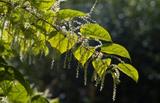
In South Carolina, we have plenty of weeds and invasive plant species. Clemson University lists 54 species in its Exotic Invasive Plant Species of South Carolina publication. Among them, Japanese knotweed stands out as one of the most destructive.
This aggressive plant grows rapidly and causes serious damage to foundations, driveways, walkways, and patios. It seeks out even the smallest cracks or weak points, growing through concrete and spreading underground. Over time, this expansion leads to structural damage and costly foundation repairs for homeowners across South Carolina.
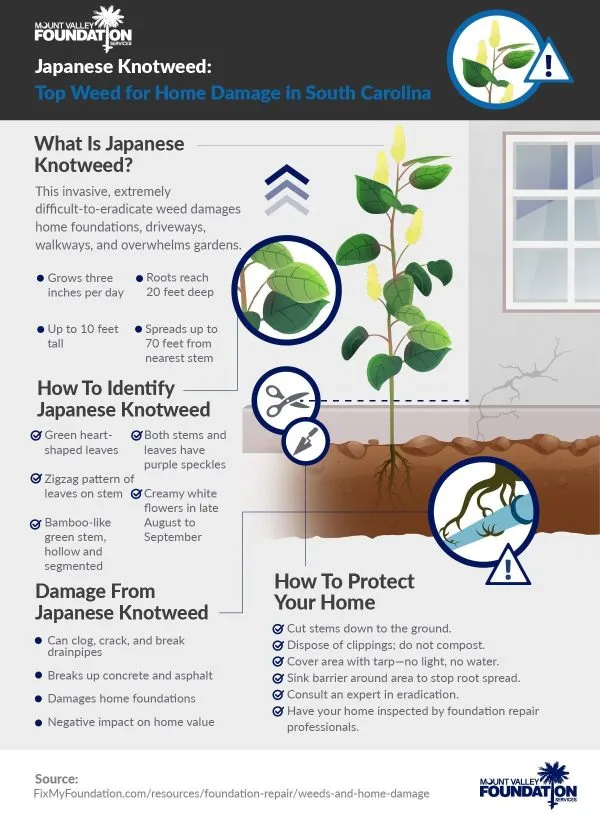
Share this Image on Your Site!
Simply copy and paste the code below and you can share this infographic on your site:
What Is Japanese Knotweed?
Japanese knotweed (Reynoutria japonica) grows rapidly both above and below ground. Its extensive network of underground rhizomes has lateral shoots and roots that spread aggressively. During the warm months, its stems can grow up to ten feet tall and three inches per day. Below ground, the roots can grow as deep as 20 feet, and the rhizomes can spread up to 70 feet from the nearest stem.
Even more concerning, it can regrow from as little as a half-inch piece of stem, root, or rhizome. Because of its resilience, it’s listed among the Top 100 World’s Worst Invasive Alien Species. Once established, Japanese knotweed is extremely difficult to remove and can quickly reappear if not properly managed.
How To Identify Japanese Knotweed in South Carolina
Japanese knotweed has a very distinctive appearance. Look for:
Japanese knotweed thrives along riverbanks, in undisturbed soils, and along cracked foundation walls, where moisture collects.
How Does Japanese Knotweed Damage Homes and Foundations?
Japanese knotweed is a structural threat to your home. Its powerful rhizomes search for water and spread through cracks and weak points in concrete and masonry. Over time, they can:
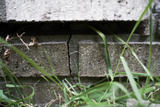
- Penetrate and widen foundation cracks
- Block or rupture drainpipes
- Lift patios, driveways, and sidewalks
- Destabilize retaining walls and stonework
Repairing damage caused by Japanese knotweed can be expensive. Managing infestations requires repeated treatments, excavation, and long-term monitoring, which increase remediation costs. Invasive plant species reports from the New York State Department of Environmental Conservation state that control efforts for aggressive plants, such as Japanese knotweed, require significant annual resources.
Even small infestations can affect home resale value and complicate property transactions, as many states now require disclosure of invasive species during real estate sales.
How To Get Rid of Japanese Knotweed in Your Yard
Eradicating Japanese knotweed requires patience and consistency. Effective control methods include:
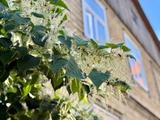
Avoid composting clippings or disturbing soil near the plant, as this spreads root fragments and exacerbates growth. In advanced cases, professional excavation or chemical treatment may be needed.
How To Protect Your Home From Regrowth
Even after removal, knotweed rhizomes can remain dormant for years. Protect your property by:
Prevention is far less expensive than remediation, especially for homes with existing concrete or foundation issues.
Foundation Damage? Mount Valley Foundation Services Can Help
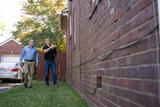
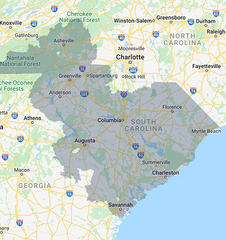
If you’ve noticed cracks, uneven slabs, or signs of moisture near invasive plant growth, Mount Valley Foundation Services can help. Our local teams in Columbia, Charleston, and Greenville repair foundation and concrete damage caused by roots, soil movement, and water intrusion. We understand South Carolina’s unique soils and soil conditions.
Schedule a free inspection today to protect your home and ensure your foundation remains strong tomorrow.
Japanese Knotweed FAQs
Through its deep, extensive root system and small fragments of the plant that can grow into new plants.
Yes, its presence can lower property values and make homes difficult to sell.
Not illegal, but laws require you to control its spread to neighboring properties.

Leah Leitow
Related Resources
Publish Date:
Last Modified Date:
Our Locations
630 Ellis Street, Suite 2-B
Augusta, GA 30901
1850 Ashley River Rd
Charleston, SC 29407
401 Gamble Dr., Suite B
Columbia, SC 29209
1704 N. Oak Street, Suite 3
Myrtle Beach, SC 29577
6606 Abercorn St., Suite 211
Savannah, GA 31405